
The Coding Train
Creative Tools, Coding Tools, and Developer Platforms with a focus on live implementation and accessibility.
Nutrition Label
This channel offers high-energy, authentic creative coding education where the host writes and debugs code live. Viewers get practical, reproducible demonstrations of AI and graphics libraries like ml5.js and p5.js, with a strong emphasis on the "messy" reality of software development rather than polished, theoretical lectures.
Strengths
- +
- +
- +
Notes
- !Tutorials feature live coding with visible debugging, while roadmap updates naturally offer less technical depth.
- !Videos focus on applying libraries like ml5.js creatively rather than analyzing underlying model architectures.
Why this score
“I'm going to go to the index.html file... and I'm going to paste in the link to the beta version.”
Demonstrates the actual workflow of switching library versions in real-time, showing the exact steps required rather than just listing them.
Open receiptTrust Breakdown
Mixed / General Lens: Scored with the default trust weighting.
Confidence pending. Based on 10 long-form videos.
These six Trust Core outputs drive the public creator rating. Communication affects discovery ranking separately. Methodology →
Recent Videos
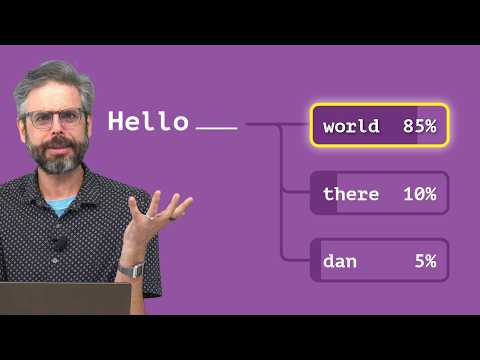
Why Language Models Surprise You
Coding Challenge 188: Voice Chatbot

What the font?!?!
What is Transformers.js?

Coding Challenge 187: Bayes Theorem
Coding Challenge Session: Local Browser Conversational Chatbot (STT, TTS, and more?)
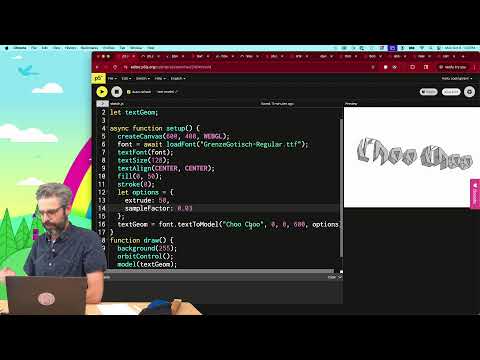
new p5.js 2 functions: textWeight, textContours, textModel
What's next?
How to Load Data with p5.js (2.0)
What's new in p5.js 2!

Upcoming Plans, ML Sampling with softmax and temperature
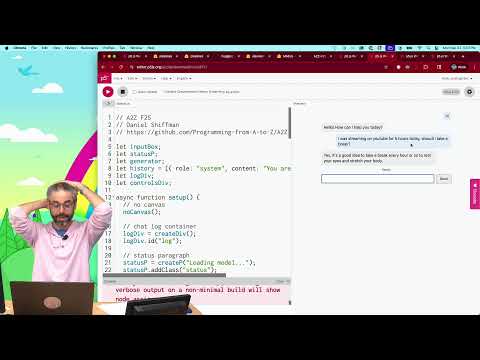
Introduction to Transformers.js (LIVE RECORDING SESSION ARCHIVE)
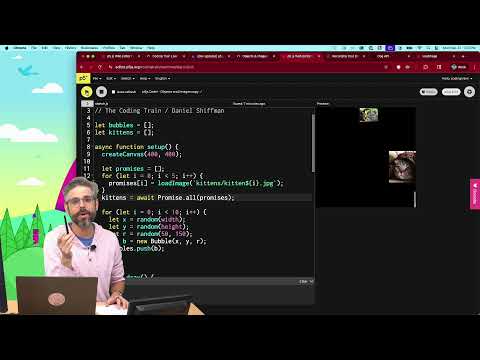
p5.js 2.0: loading data with async and await (LIVE RECORDING SESSION ARCHIVE)

Coding TRAIN WRECK: Bayesian Text Classification

Robot Controllers Part 2 with Dr. Christian Hubicki
Shareable card
A compact ReReview card and short URL for sharing this trust score.
