
Connor Shorten
RAG pipelines, DSPy optimization, and vector search with a focus on code-level implementation.
Nutrition Label
Connor Shorten produces high-fidelity, code-centric tutorials focused on modern AI engineering, particularly RAG pipelines and the DSPy framework. His content is excellent for developers, as he frequently reads library source code and runs live notebooks to explain complex architectures. While highly educational, he is professionally affiliated with Weaviate, meaning his deep expertise is often paired with specific vendor advocacy.
Strengths
- +
- +
- +
Notes
- !Creator is employed by Weaviate; check descriptions for disclosures when vector search tools are featured.
- !Recap videos summarize external content and lack the hands-on code execution found in his tutorials.
Why this score
“Let's actually go into the code... this is the BootstrapFewShot class... let's look at the compile method.”
The creator leaves the notebook to read the actual library source code, explaining the internal logic of the optimizer rather than just the API surface.
Open receiptTrust Breakdown
Mixed / General Lens: Scored with the default trust weighting.
Confidence pending. Based on 10 long-form videos.
These six Trust Core outputs drive the public creator rating. Communication affects discovery ranking separately. Methodology →
Recent Videos
Chunking with Generative Feedback Loops
Google Gemini 1.5 Pro and Flash - Demo of Long Context LLMs!
Llama 3 RAG Demo with DSPy Optimization, Ollama, and Weaviate!
Building RAG with Command R+ from Cohere, DSPy, and Weaviate!
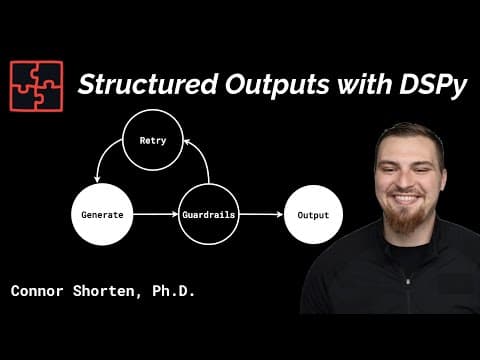
Structured Outputs with DSPy
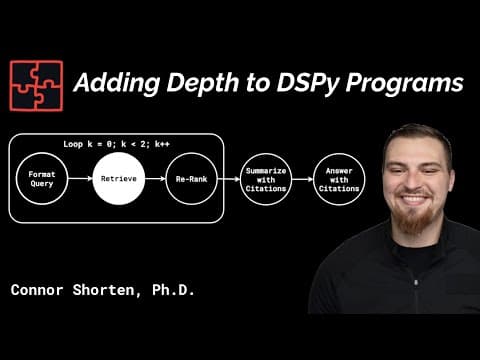
Adding Depth to DSPy Programs
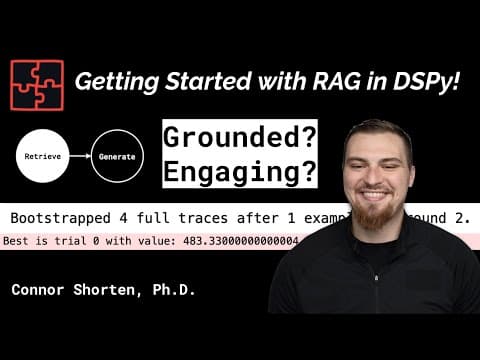
Getting Started with RAG in DSPy!
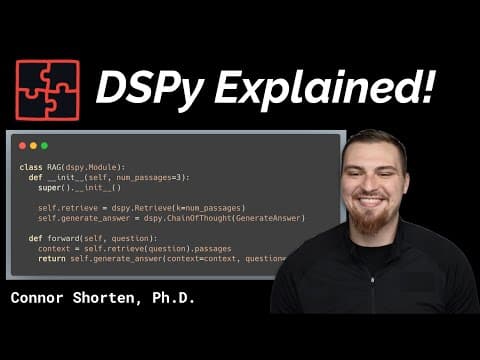
DSPy Explained!
Approximate Nearest Neighbor Benchmarks - Weaviate Podcast Recap
Search through Y Combinator startups with Weaviate!
MosaicML Composer for faster and cheaper Deep Learning!

Jina AI DocArray - Documentation Overview

What lead Jina AI CEO Han Xiao to Neural Search?
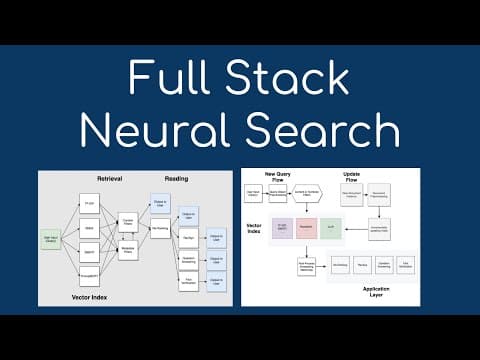
Full Stack Neural Search

Python Tutorial: How to use Weaviate and Jina AI for Image Search!
Shareable card
A compact ReReview card and short URL for sharing this trust score.
