All creators










AI for Good
Robotics, AI, and Sustainability with a focus on real-world deployment and efficiency.
Nutrition Label
Academic-focused presentations on AI applications in robotics, health, and sustainability.
Strengths
- +
- +
- +
Notes
- !Content is highly technical and academic, best suited for researchers or industry professionals.
- !Check the description for links to the cited research papers for deeper technical context.
Why this score
Experience Authenticity · 04:21
“One session in lab setting... Participants: 28 children between 8-13 y.o.”
Demonstrates real-world research methodology with specific participant data.
Open receiptTrust Breakdown
Evidence Quality
7.8Firsthand Access
7.7Analysis Quality
7.2Depth & Nuance
7.6Disclosure Clarity
7.0Framing Integrity
10.0Explainer Lens: Reasoning and depth carry more weight.
High confidence. Based on 5 long-form videos.
These six Trust Core outputs drive the public creator rating. Communication affects discovery ranking separately. Methodology →
Recent Videos
Pending
Meet the top Africa entrepreneur finalists 2026
Oct 20, 2026
Pending
From trusted knowledge to accountable action
Oct 20, 2026
Pending
Presidential address at the AI for Good Global Summit | President Paul Kagame
Oct 19, 2026 • 145 views
Pending
AI and the future of young people | H.E. Halla Tómasdóttir
Oct 19, 2026 • 149 views
Pending
Opening remarks at the AI for Good Global Summit | Guy Ryder
Oct 19, 2026 • 74 views
Pending
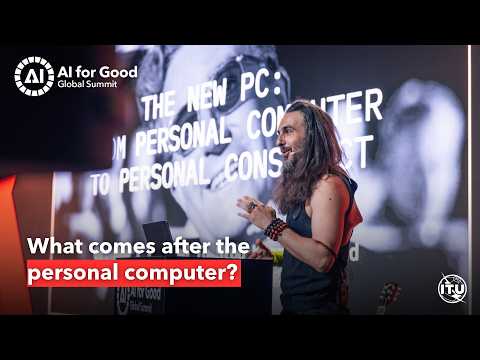
The Personal Construct: A new model for human-centred AI
Oct 19, 2026 • 102 views
Pending
Presidential address at the AI for Good Global Summit | President Alar Karis
Oct 13, 2026 • 214 views
Pending
Embodied AI for multimedia technologies: From perception to human collaboration
Oct 8, 2026 • 246 views
Pending
AI for Climate Innovation Factory 2026 live pitching session
Oct 7, 2026 • 1.0K views
Pending
AI as a global common good | Fadi Daou, Chinmay Pandya & Brian Patrick Green
Oct 2, 2026 • 100 views
Pending
Built on trust: Why dependable outcomes need trusted context and clear control
Sep 30, 2026 • 289 views
Pending
Entering the next era of AI
Sep 29, 2026 • 613 views
Pending
Skills, standards and solutions - Frederic Werner Interview with CNBC Africa
Sep 22, 2026 • 42 views
Pending
Perspectives on AI-native 6G: Technologies and strategy
Sep 21, 2026 • 234 views
Pending
Brain AI²: beyond intelligence through surgery-free nano-implants | Deblina Sarkar
Sep 18, 2026 • 420 views
Shareable card
A compact ReReview card and short URL for sharing this trust score.
AI for Good
ReReview Trust Score
7.7
Worth Prioritizing
rereview.co/c/ai-for-good
Canonical: rereview.co/creators/ai-for-good
Categories
AI AssistantsAutomation & AgentsCreative ToolsData & AnalyticsResearch ToolsVideo GenerationWorkflow Tools
Formats
ExplainersDeep Dives